
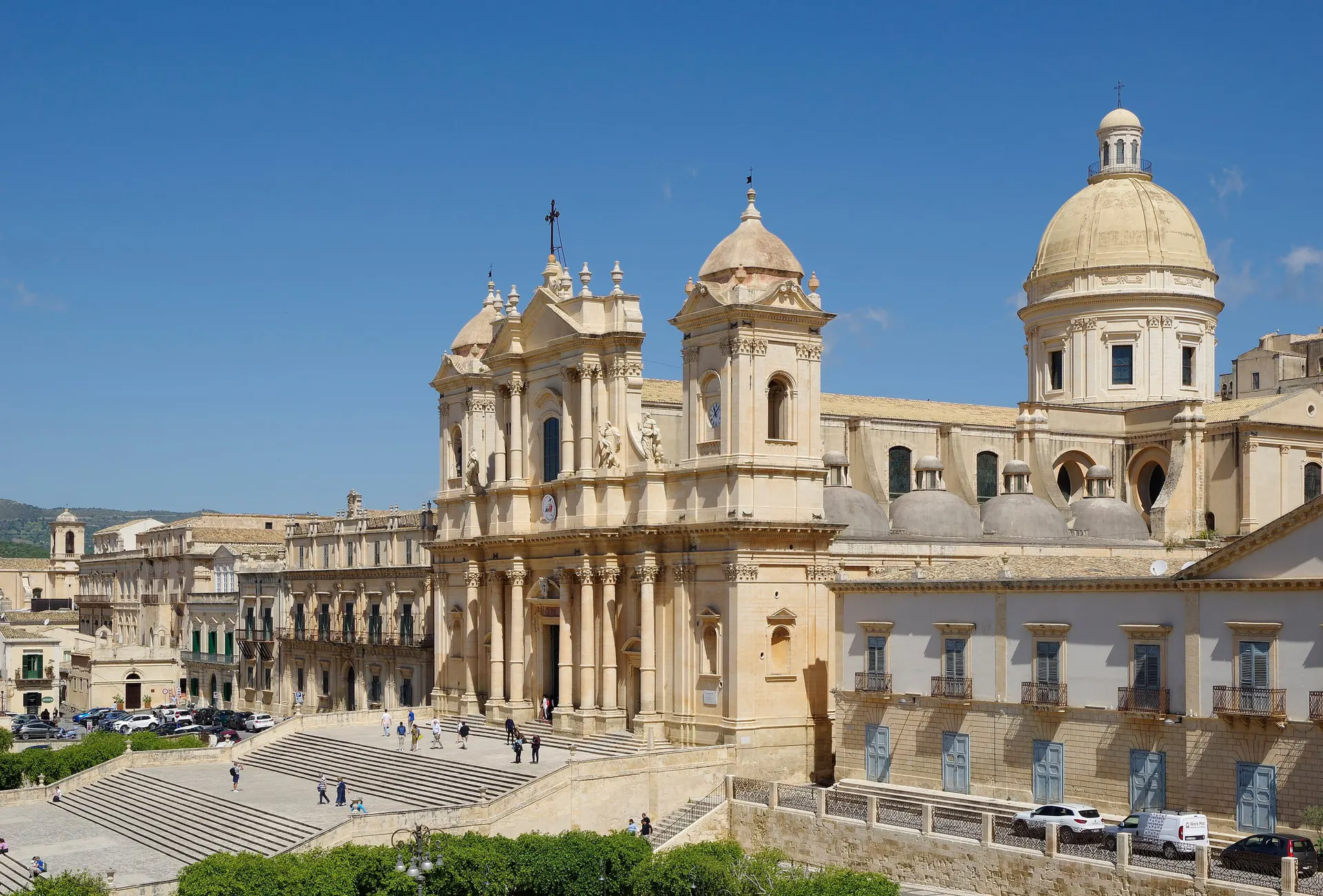
Noto is a city designed on the drawing board. Destroyed by the earthquake of 1693, it was rebuilt a few kilometres further down the valley on an even slope, with a main street and three squares in a row, each with its own church. The result is a single stage set in limestone that turns golden in the afternoon sun.
Not to be missed
- The Cattedrale di San Nicolò, at the top of its great flight of steps. The dome collapsed in 1996 and has been rebuilt: the church reopened in 2007.
- Palazzo Nicolaci and its balconies, held up by mermaids, winged horses, lions and cherubs: look at them from below, from the street.
- Corso Vittorio Emanuele, from Porta Reale onwards: everything is here, in less than a kilometre.
- The Infiorata, on the third Sunday of May: via Nicolaci is covered with a carpet of petals laid in a single night.
What the locals know
- To understand how the city is laid out you need to see it from above: go up to the terrace of the church of Santa Chiara or the bell tower of San Carlo, both on the main street, for a few euros.
- Come in the late afternoon. At midday in summer the main street is an oven and the stone is dazzling; from five o’clock on, the light is the one Noto is famous for, and in the evening the city is lit up.
- Breakfast here is almond granita with a brioche: the almonds are from Noto and Avola, more fragrant and less sweet than the ones you’re used to. Ask for the “tostata” (toasted) version too.
- About ten kilometres away, on Monte Alveria, lie the ruins of Noto Antica, the city abandoned after the earthquake: walls, a gateway, remains scattered through the woods. Hardly anyone goes there.
From Marina di Ragusa
About 70 km, an hour and a quarter. You park outside the walls, near Porta Reale. It combines well with Vendicari or Marzamemi.